Safeguarding Staff at Places of Worship: Emergency Response and Best Practices

Places of worship are meant to be sanctuaries, spaces of peace, community, and spiritual connection. Yet in today’s world, the leaders and administrators who care for these sacred spaces face a sobering reality: the need to prepare for emergencies while maintaining the welcoming, open nature that defines religious communities.
On January 7, 2026, a shooting outside an LDS meetinghouse in Salt Lake City left two people dead and six wounded during a memorial service (1). The tragedy underscores a painful truth: houses of worship of all faiths are not immune to violence. From medical emergencies to active threats, from suspicious individuals to staff working alone, places of worship face unique safety challenges that demand thoughtful preparation.
Unlike corporate offices or retail spaces, houses of worship operate with limited security infrastructure, often rely on volunteers, and maintain open-door policies that are central to their missions. This creates a delicate balance: how do you protect your community without sacrificing the inclusive environment that defines your faith?
The good news? With thoughtful planning, practical tools, and a culture that prioritizes safety, worship communities can protect their staff and volunteers without sacrificing their core values.
This guide explores how places of worship can create comprehensive emergency response plans, implement practical security measures, and support staff in high-risk situations. Whether you lead a church, mosque, synagogue, temple, or other faith community, the principles and strategies outlined here will help you create a safer environment for everyone who enters your doors.
Why Emergency Preparedness Matters for Places of Worship
The reality is clear: houses of worship have become targets. In recent years, violent incidents at religious facilities have increased, prompting federal agencies like CISA (Cybersecurity and Infrastructure Security Agency) to develop comprehensive resources for protecting faith-based communities (2). The Department of Homeland Security has also released guidance specifically for securing houses of worship and the events they host (3).
Yet many places of worship remain unprepared. Some believe that their faith community is immune to such incidents. Others feel overwhelmed by the complexity of security planning and fear that implementing safety measures will create an unwelcoming environment.
The truth is that emergency preparedness and community welcome are not mutually exclusive. The most effective security strategies at places of worship are those that operate in the background, noticed by few but ready to protect everyone.
Consider the recent Salt Lake City incident. While the shooting occurred outside the facility, it demonstrates that threats can materialize quickly and without warning. Staff and volunteers need to know how to respond. Leadership needs communication systems in place. First responders need to understand the layout and access points of the building.
Emergency preparedness also extends beyond active threats. Medical emergencies, fires, severe weather, suspicious individuals, and other incidents require coordinated responses. When systems are in place, staff feel more confident, members feel safer, and your organization is better protected legally and operationally.
Unique Challenges for Places of Worship

Before developing a security plan, it’s important to understand what makes houses of worship different from other facilities.
Open-Door Policies
Most places of worship welcome visitors without requiring screening or background checks. This openness is fundamental to their mission. However, it means that anyone can enter the building at any time, creating vulnerability.
Limited Security Infrastructure
Unlike corporate offices or government buildings, most places of worship lack security personnel, surveillance systems, or access control systems. Many operate with limited budgets and volunteer staff.
Large Gatherings
Houses of worship often host large events, particularly during holidays or special services. More people means more potential for incidents and more complexity in evacuation procedures.
Staff Working Alone
Nursery workers, office administrators, custodial staff, and others often work alone in isolated areas of the building. They may be vulnerable if an emergency occurs.
Trust-Based Culture
Worship communities are built on trust. Implementing visible security measures can feel contrary to the welcoming, trusting environment that defines faith communities. Any security strategy must maintain this balance.
Developing a Comprehensive Emergency Response Plan
A strong emergency response plan begins with leadership commitment and includes all stakeholders: clergy, administrators, staff, volunteers, and security personnel (if available).
Establish a Security Committee
Create a team responsible for developing and maintaining your emergency response plan. This should include:
- Leadership (pastor, rabbi, imam, or equivalent)
- Administrator or facilities manager
- Key volunteers
- Law enforcement liaisons (if available)
- Medical personnel or first aid trained individuals
This committee should meet quarterly to review, test, and update plans.
Conduct a Facility Assessment
Work with local law enforcement or security professionals to assess your building. Identify potential vulnerabilities:
- Entry and exit points
- Areas where staff work alone
- High-visibility areas (where a problem would be noticed quickly)
- Communication dead zones
- Evacuation routes and assembly areas
- Accessibility concerns for people with disabilities
Create Clear Protocols
Your plan should address:
- Active threat response (lockdown, evacuation, shelter-in-place)
- Medical emergencies
- Fire or environmental hazards
- Suspicious individuals
- Communication procedures
- Roles and responsibilities during an emergency
Each protocol should be simple, clear, and practiced regularly.
Establish Communication Systems
When an emergency occurs, staff and volunteers need to communicate quickly and clearly. Options include:
- Two-way radios
- Text alert systems
- Email or phone trees
- Intercoms or public address systems
- Panic buttons or emergency call systems
The most effective facilities use multiple communication methods to ensure redundancy.
Protecting Staff and Volunteers Working Alone

Many places of worship employ or rely on volunteers who work alone, especially during off-hours or in isolated areas. Childcare workers, administrative staff, custodians, security personnel, and others may be at elevated risk during violent incidents, medical emergencies, or other critical situations.
Conduct a Vulnerability Assessment
Identify which staff and volunteers work alone and when. Understand which areas of the building are most isolated and hardest to reach in an emergency.
Implement a "Buddy System"
Where possible, ensure that critical functions are never performed by a single person. If staff must work alone, establish check-in protocols and regular walkarounds by other personnel.
Provide Immediate Alert Systems
Staff working alone should have a quick, reliable way to summon help. This could include:
- Panic buttons (one-touch emergency devices)
- Two-way radios with an emergency channel
- Personal emergency alert devices
- Mobile apps that can trigger emergency notifications
Panic buttons are particularly effective because they allow staff to discreetly call for help without drawing attention from a potential threat or suspect.

Train Staff on Response Procedures
Ensure that all staff and volunteers understand:
- How to use any emergency alerting systems
- When to use them (not just for active threats, but for any emergency)
- Where to go if they need to evacuate
- How to help others, including those with mobility limitations
- When to shelter in place versus evacuate
Training should be conducted regularly and should include scenario-based practice.
Implementing Practical Security Measures
Effective security at places of worship focuses on practical measures that balance safety with community values.
Controlled Access During Services
Consider having a designated entrance for members and guests during services, with other doors locked from the outside. Ensure at least one emergency exit remains unlocked and clearly marked.
Situational Awareness
Train staff and volunteers to notice unusual behavior: individuals acting erratically, displaying weapons, or entering restricted areas. Create a culture where staff feel comfortable reporting concerns without judgment.
Coordination with Law Enforcement
Build relationships with local police departments. Invite them to walk through your facility and provide feedback. Some departments offer security assessments for houses of worship at no cost. Consider having officers attend special events or high-attendance services.
Surveillance and Monitoring
Install security cameras in common areas (not in private spaces). Video surveillance can deter some threats and provides valuable information for law enforcement after an incident.
First Aid and Medical Preparedness
Train staff in CPR and first aid. Maintain accessible AED (automated external defibrillator) devices. Have a clear protocol for responding to medical emergencies, including how to interact with emergency responders.
How Silent Beacon Supports Emergency Response
For places of worship seeking to protect their staff and volunteers, Silent Beacon’s panic button solution offers a practical, discreet way to summon help quickly.
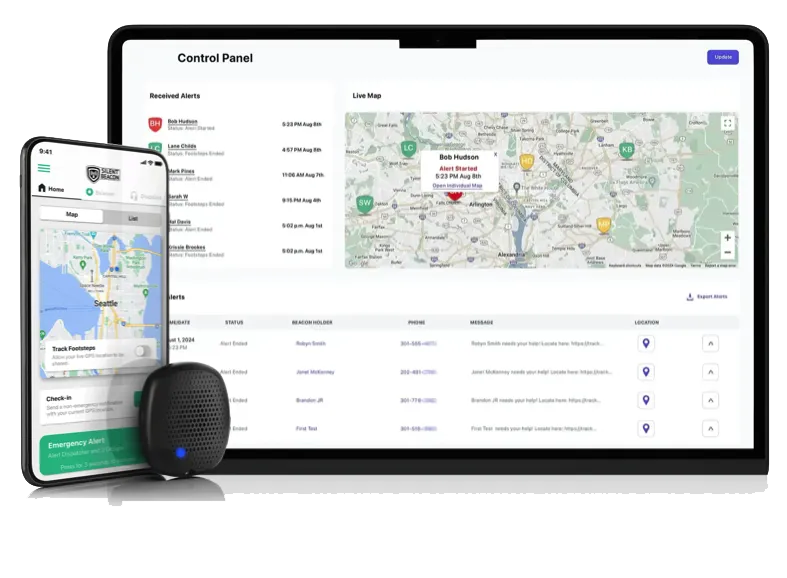
One-Touch Emergency Alert
Silent Beacon devices allow staff working alone or in isolated areas to immediately alert designated contacts with a single press. No passwords, no delays. When an emergency occurs, every second counts.
Multi-Channel Notifications
When a panic button is activated, alerts are sent via text, phone call, email, and app notifications. This ensures that clergy, administrators, security personnel, or designated responders receive the alert immediately through their preferred communication method.
GPS Location Tracking
Each Silent Beacon device includes GPS tracking, allowing responders to know exactly where the person in distress is located. In a large facility with multiple buildings or expansive grounds, this is invaluable.
Discreet and Non-Intrusive
Silent Beacon devices are portable and can be worn discreetly by staff. Unlike visible security systems, they don’t change the welcoming atmosphere of your worship space.
Flexible Deployment
Whether you’re equipping nursery workers, office staff, custodians, or security volunteers, Silent Beacon can be deployed wherever staff work alone or in vulnerable positions.
Documented Response and Record-Keeping
Silent Beacon provides records of all panic button activations, including when they were triggered and who responded. This documentation is valuable for improving response procedures and demonstrating due diligence to insurance providers and law enforcement.
Training and Practicing Emergency Response
The best emergency plan is worthless if staff don’t know how to execute it. Regular training and practice drills are essential.
Conduct Regular Training
Hold training sessions at least twice per year. Cover:
- How to recognize potential threats
- How to use any emergency systems or devices
- Evacuation procedures and assembly points
- How to help others, especially those with mobility limitations
- What to expect from law enforcement response
Run Tabletop Exercises
Gather your security committee and walk through scenarios verbally. Discuss how your team would respond to an active threat, medical emergency, fire, or other incident. Identify gaps in your plan.
Conduct Evacuation Drills
Periodically practice evacuating your facility. Time the evacuation and work to improve speed and coordination. Pay special attention to how you would account for all members, especially children.
Test Communication Systems
If you have panic buttons, radios, or alert systems, test them regularly. Ensure staff know how to use them and that the systems actually work.
Debrief After Drills
After each training exercise or drill, debrief with staff. Ask what went well and what could be improved. Use feedback to refine your plan.
Supporting Staff After an Emergency
If your place of worship experiences a crisis event, your responsibility to staff extends beyond the immediate response. Proper support and follow-up care are critical.
Provide Immediate Support
In the immediate aftermath, provide staff with food, water, and a safe space. Ensure they can contact family. Don’t release them until they’re emotionally stable enough to travel home safely.
Offer Counseling and Mental Health Support
Traumatic events can have lasting psychological effects. Work with mental health professionals to offer counseling, support groups, or other resources. Make it clear that seeking support is not weakness but wisdom.
Communicate Transparently
Keep staff informed about the incident, the response, and next steps. Transparency builds trust and helps staff feel that leadership is taking the situation seriously.
Review and Improve
After the incident has passed, convene your security committee. Review what happened and what your team did right. Identify what could be improved and update your plan accordingly.
Continue to Support Your Community
Traumatic events can shake the faith of congregants. Provide opportunities for the community to process what happened, to grieve together, and to recommit to your shared values.
Key Takeaways
Protecting staff and volunteers at places of worship requires commitment, planning, and the right tools. Here’s what you need to remember:
- Emergency preparedness is not optional. Violence, medical emergencies, and other crises can occur at any place of worship.
- Balance is essential. You can implement strong security measures while maintaining the welcoming, trusting environment that defines your community.
- Staff working alone or in isolated areas are most vulnerable. Ensure they have a quick, reliable way to summon help.
- Communication systems are critical. When emergencies occur, staff and responders need to communicate immediately and clearly.
- Practice matters. Regular training, drills, and exercises ensure that your plan actually works when needed.
- Support your staff. After an emergency, provide counseling, transparency, and resources to help your team recover.
The January 7 shooting at a Salt Lake City place of worship reminds us that no community is immune to tragedy. But with planning, training, and the right tools, you can significantly reduce risk and respond effectively when emergencies occur.
Protect Your Place of Worship and Your Staff
If you’re looking for a practical, discreet way to protect staff working alone or in isolated areas at your place of worship, Silent Beacon’s panic button solution can be an important part of your emergency response plan.
Our devices are designed for easy deployment and immediate alert delivery, helping staff summon help instantly when they need it most. Whether you’re equipping a small chapel or a large facility with multiple buildings, Silent Beacon can be customized to meet your needs.
Contact Silent Beacon today to learn how we can help your place of worship protect its staff and volunteers while maintaining the welcoming environment that defines your community.
References
- Salt Lake Tribune. (2026, January 7).“2 dead, 6 wounded in shooting outside LDS church in Salt Lake City.” Retrieved from https://www.sltrib.com/news/2026/01/07/lds-church-funeral-shooting/
- Cybersecurity and Infrastructure Security Agency (CISA).“Protecting Houses of Worship: Resources.” Retrieved from https://www.cisa.gov/topics/physical-security/protecting-houses-worship/resources
- S. Department of Homeland Security (DHS). (2017).“Security of Soft Targets and Crowded Places: Faith-Based Events and Houses of Worship.” Retrieved from https://www.dhs.gov/sites/default/files/publications/170531NSI_SAR-Faith-Based-Events-Houses-Worship.pdf