Why Every Therapy Practice Needs a Panic Button Solution

A conversation with Silent Beacon's Josh Dunham on Private Practice Practically
After a therapist was brutally attacked by a client in Florida, the mental health community got a stark reminder: clinicians work alone, behind closed doors, with people in crisis. Safety can’t be an afterthought.
Josh Dunham, Vice President of Sales and Strategic Partnerships at Silent Beacon, recently sat down with the team at Private Practice Practically to talk about what real safety looks like for therapists and how wearable panic button technology is changing the game for private practices and mental health organizations.
The Problem With "I Have My Phone"
One of the biggest pushbacks Josh hears from practice owners is simple: we already have our phones. But as he pointed out during the conversation, that logic falls apart the second an actual emergency happens.
“No perpetrator and no aggressor is going to give you the time to grab your phone, swipe up, enter your code, and dial 911,” Josh said. “In those moments of stress and chaos, your mind isn’t functioning the way it normally would. It comes down to seconds.”
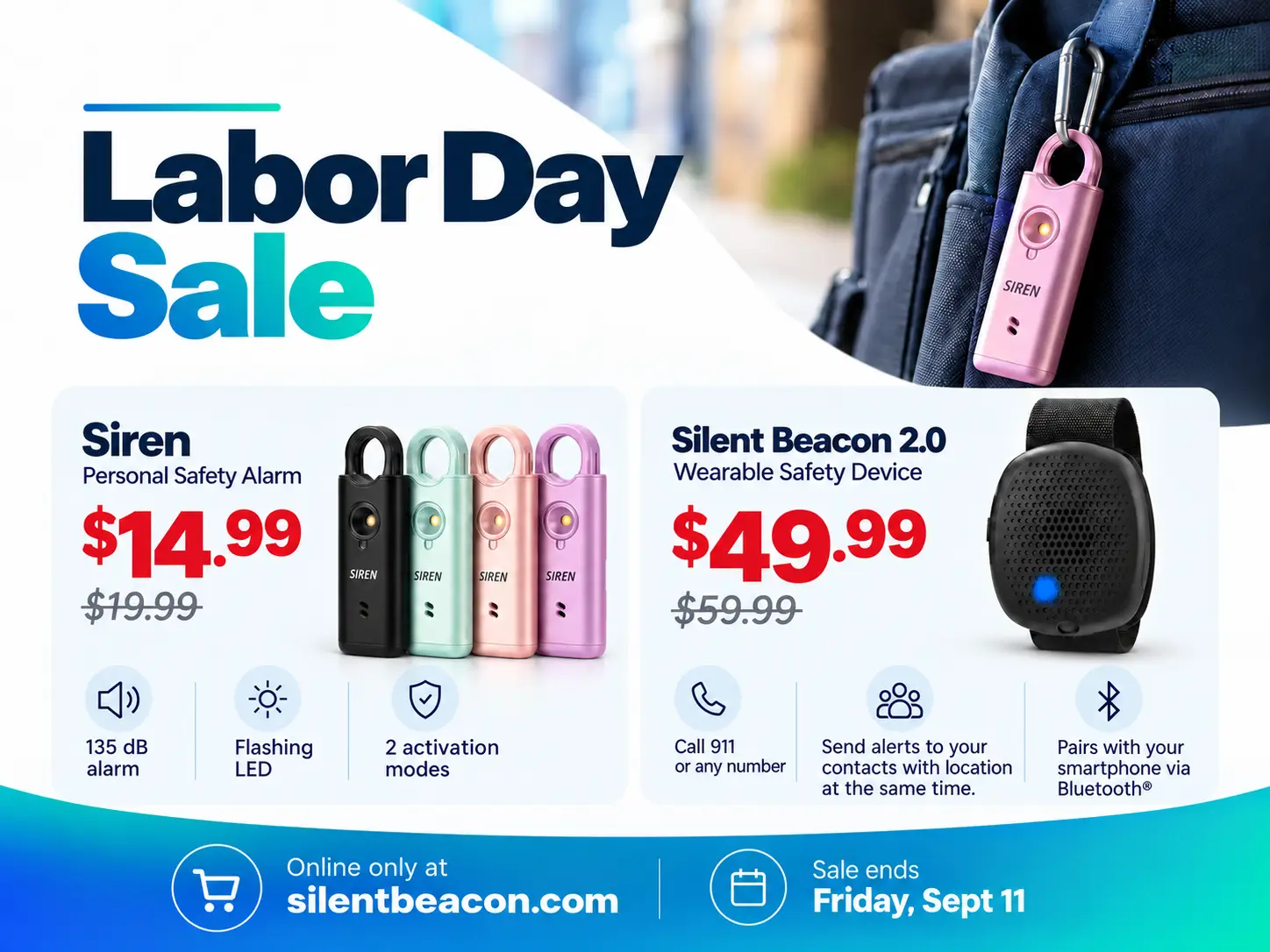
Silent Beacon’s wearable device pairs via Bluetooth® to a smartphone and places a call with a single button press, held for just a second and a half. No screen to unlock. No app to open. No time wasted.
Built for How Therapists Actually Work
Unlike stationary panic buttons mounted under a desk, Silent Beacon is designed to stay on the clinician. It can be worn as a watch, clipped to clothing, hung on a lanyard, or attached to a bag.
Josh made the case for mobility clearly: “If something goes down and the device is clipped to your desk but you’re on the other side of the room, and someone is between you and that device, you’re not going back for it.”
The device also features a silent mode, which is critical in a therapy setting. When activated, all sounds, lights, and vibrations on the device are disabled. The clinician can trigger an alert without the other person in the room ever knowing. Meanwhile, whoever is on the other end of that call can hear everything happening through the device’s built-in microphone. Organizations like Mental Health Cooperative have already deployed Silent Beacon across their teams to protect clinicians working in exactly these conditions.
More Than a Panic Button
What sets Silent Beacon apart from other solutions is the two-way audio. When the button is pressed, the clinician isn’t just sending a signal to a monitoring center and waiting for someone to verify the emergency. They’re connected directly to 911 or whoever the device is programmed to reach, whether that’s an internal security team, a supervisor, or emergency services.
“Other solutions require a third party to verify the emergency before dispatching help,” Josh explained. “That extra step cancels out the reason you wanted the device in the first place.”
On top of the direct call, the system simultaneously sends text messages and emails to pre-programmed contacts with the clinician’s real-time GPS location. Practice owners can configure all of this through an admin dashboard, organizing staff by teams, shifts, and locations.
The Message It Sends to Your Staff
Beyond the technology itself, Josh highlighted something practice owners don’t always consider: what implementing a safety solution says to your team.
“When an organization puts something like this in place, the message it sends is that safety is paramount,” he said. “Clinicians tell us it gives them peace of mind and the confidence to keep doing the work they’re doing. They’re not constantly thinking about what happens if something goes wrong.”
That peace of mind has a ripple effect. Clinicians who feel safe set better boundaries, stay more present with clients, and stick around longer. It’s a retention play as much as it is a safety play.
Getting Started Is Simpler Than You Think
One of the most common concerns Josh hears is about setup complexity. The reality is that Silent Beacon requires zero hardware installation. No drilling, no wiring, no IT infrastructure. Devices ship directly to the practice, and Silent Beacon’s team handles onboarding, training, and dashboard setup.
For practices that want to test before committing, trial devices are available. And for organizations that don’t yet have a formal safety protocol, Silent Beacon’s team will consult on building one, helping practices integrate the device into their existing workflows or create a safety plan from scratch.
“We want it to be like a seatbelt,” Josh said. “You put it on, and then you forget about it. But the important part is getting it set up right.”
Take the Next Step
Whether you’re a solo practitioner or you run a multi-location practice, the conversation is worth having. Explore our healthcare safety solution or reach out to our team directly to discuss how Silent Beacon fits into your safety plan.
Because as Josh put it: “It’s something you want to have and not need, versus need and not have.”
See How Our Solution Helps Protect Therapy Practices
Give your clinicians the confidence to focus on their work, not their safety.