Lone Worker Safety for Utilities: Closing the Gaps

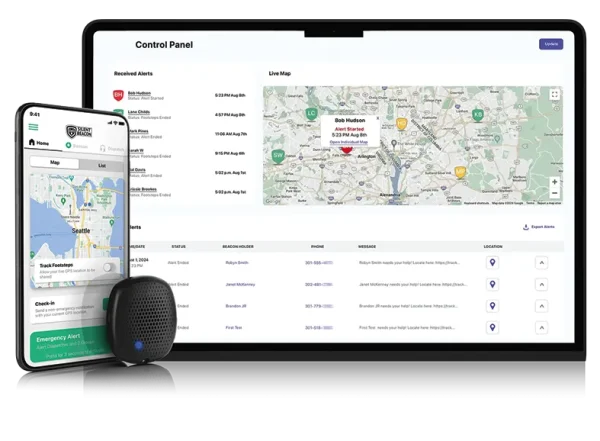
The complete lone worker safety platform featuring a wearable panic button, mobile app, and cloud dashboard. One-press alerts, real-time GPS, and full visibility help protect every worker in the field.
The moment everything breaks down
A line technician pulls onto a rural property just before dusk. The service ticket looks routine.
No nearby crews. No backup. No visibility into who owns the property or what condition they’re in.
Ten minutes later, the situation escalates.
This is the moment every safety manual tries to prevent and almost none can actually control.
Utilities and industrial field teams don’t operate in controlled environments. They work alone, in unpredictable conditions, often far from immediate help. And when something goes wrong, response time becomes the difference between resolution and incident.
This is the core failure behind many lone worker safety programs today: they are designed for predictable environments, not for the reality of lone technicians.
Why traditional safety programs fall short in the field
Most organizations already have a lone worker safety protocol. On paper, it looks comprehensive. In practice, it breaks down quickly.
Common approaches that fail in real-world conditions
-
Scheduled check-ins
Relies on memory and compliance. Fails during fast-moving incidents.
-
Buddy systems
Not scalable across large geographic territories. Increases labor costs significantly.
-
Two-way radios
Limited range. No escalation beyond internal teams.
-
Manual escalation procedures
Require multiple steps during high-stress moments. Delay emergency response.
The issue isn’t intent. It’s infrastructure.
These systems assume workers can always communicate, situations escalate slowly, and help is nearby. None of those assumptions hold true for lone technicians in remote environments.
The risk is not theoretical
The exposure is measurable and increasing.
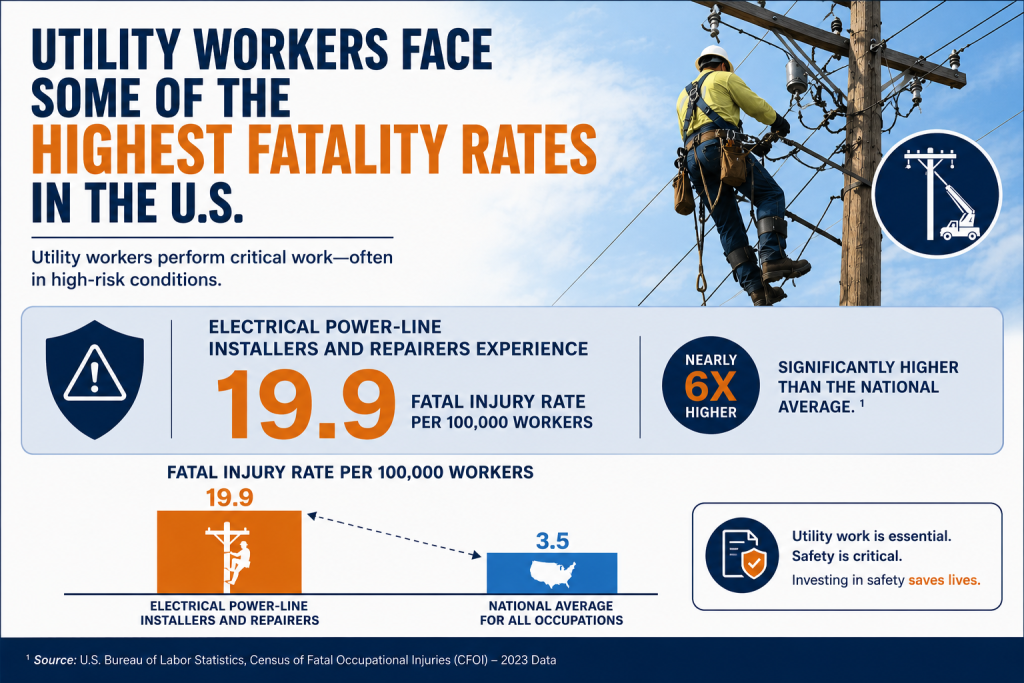
Utility workers face some of the highest fatality rates in the U.S., with electrical power-line installers and repairers experiencing a fatal injury rate of 19.9 per 100,000 workers, significantly higher than the national average.¹
According to OSHA, workplace violence is a recognized hazard for field employees who interact with the public, especially in service and enforcement roles.²
The Bureau of Labor Statistics reports that transportation incidents and contact with objects or equipment account for the majority of fatalities in utilities, both of which are amplified when employees work alone.¹
The financial exposure is just as significant. According to the Liberty Mutual Workplace Safety Index, U.S. businesses spend more than $58 billion annually on workplace injuries through workers’ compensation costs, with the top 10 causes accounting for over $50 billion of that total.³ Roadway incidents alone, a common risk for field-based employees, remain one of the leading drivers of claim severity and cost.³
Beyond incident data, workforce sentiment reinforces the same reality. A National Safety Council survey found that nearly 1 in 5 workers report feeling unsafe on the job, with those working alone reporting higher concern due to lack of immediate support.⁴
These are not edge cases. They are operational realities.
Beyond physical hazards, there is a growing layer of human unpredictability: confrontational property owners, trespassing disputes, mental health or substance-related encounters, and environmental risks in isolated areas.
The combination creates a gap that compliance programs alone cannot close.
The accountability shift facing EHS leaders
There is a reason this issue is moving up the priority list. For VP EHS and safety leaders, the challenge is no longer just prevention. It is response readiness. 1. Duty of care expectations are rising Organizations are expected to demonstrate real-time visibility into worker safety, documented response protocols, and proactive risk mitigation. Static policies do not meet that standard anymore. 2. OSHA and internal audits are evolving Safety programs are being evaluated on effectiveness in real-world conditions, incident response timelines, and documentation capabilities. Programs that rely on manual processes struggle to prove compliance. 3. Workforce expectations are changing Technicians understand the risks. When employees feel unsupported, retention drops, engagement declines, and safety culture erodes. In industries already facing labor shortages, that becomes a business risk.What modern lone worker infrastructure actually requires
To solve the lone technician problem, safety programs need to shift from process-based to infrastructure-based. That means building systems that work in the exact moment things go wrong. Core requirements for effective lone worker protection- Immediate escalation without friction One action to trigger help. No reliance on unlocking devices or navigating apps.
- Multi-channel emergency communication Internal alerts, external emergency services access, and redundant communication paths.
- Real-time location visibility Accurate GPS during active incidents that can be shared with responders.
- Hands-free communication capability The ability to speak without holding a device during critical moments.
- Reliability over long shifts and remote routes Battery life and durability that support extended field operations.
Where most solutions still miss the mark
What modern lone worker infrastructure actually requires Even with increased investment, many organizations adopt tools that only partially solve the problem. Common limitations in current solutions- App-only systems Require phone interaction during emergencies. High friction under stress.
- Monitoring center-only models Add delay between alert and response. Disconnect from local emergency services.
- Facility-based panic systems Useless once workers leave the site.
A different approach to field worker safety
A different approach to field worker safety Modern safety platforms are shifting the model. Instead of relying on workers to follow processes perfectly, the goal is to reduce the number of steps required to get help to one or less. Silent Beacon is built around that principle.How Silent Beacon closes the gap
In environments where seconds matter, the system must work instantly, reliably, and without added complexity.
Single-press emergency escalation
The wearable panic button allows technicians to trigger alerts instantly without using their phone. Alerts can be discreet or audible depending on the situation.
This removes the biggest failure point in traditional programs: hesitation and delay.

Direct connection to 911 and response teams
Unlike many systems that only notify internal contacts, Silent Beacon can call 911 directly while also notifying supervisors and designated responders. This ensures faster escalation and eliminates dependency on intermediaries.Hands-free communication in critical moments
The built-in speaker and microphone enable two-way communication without holding a phone. This allows technicians to coordinate with responders while staying focused on the situation.Footsteps Mode for route monitoring
Live location sharing provides visibility during routes, allowing supervisors to monitor movement patterns in real time. This is especially valuable for remote infrastructure inspections and rural service routes.Built for field conditions
The device offers more than 40 days of battery life and requires no infrastructure. It travels with the employee, not tied to a facility. This aligns directly with the mobility challenges utilities face.The shift from policy to protection
The real takeaway is not about adding more procedures. Organizations that effectively protect lone technicians assume incidents will happen, prioritize response speed, and invest in systems that work under pressure. That is the difference between a safety program and a safety system.What this means for your organization
If your teams are operating alone in the field, in unpredictable environments, and without immediate support, the question is not whether your safety program exists. It is whether it works when it matters.Final thought
The lone technician problem is not new. What has changed is the expectation that organizations can and should solve it.
Explore safety solutions for your organization or learn how Silent Beacon works for utility and industrial field teams operating in high-risk environments.
References
- U.S. Bureau of Labor Statistics, Census of Fatal Occupational Injuries
https://www.bls.gov/iif/oshcfoi1.htm - Occupational Safety and Health Administration, Workplace Violence Guidelines
https://www.osha.gov/workplace-violence - Liberty Mutual Workplace Safety Index
https://business.libertymutual.com/workplace-safety-index/ - National Safety Council, Workplace Safety Survey
https://www.nsc.org/work-safety/safety-topics/workplace-safety