How to Stay Safe When Alone: Smart Safety Tips for Solo Travelers, Remote Workers, and Everyday Adventures
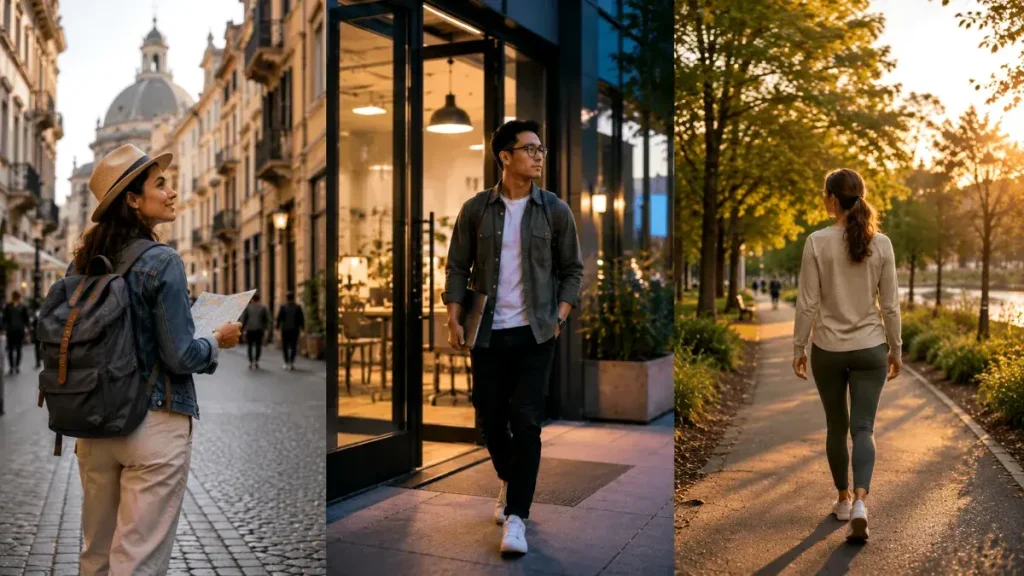
Traveling solo. Working remotely from somewhere new. Exploring a city on your own. Taking a weekend hike to clear your head.
Doing things alone can be one of life’s greatest freedoms.
The key to enjoying that freedom isn’t worrying about what might happen. It’s having a few smart habits and a plan if something does.
Staying safe when you’re alone isn’t about fear. It’s about confidence. At Silent Beacon, we believe personal safety should help people live with more confidence, not more worry. When you know you’ve prepared for the unexpected, you’re free to focus on the experience itself.
Key Takeaways
- Stay aware of your surroundings without becoming fearful.
- Let someone know where you’re going and when you’ll return.
- Keep communication tools charged and ready.
- Trust your instincts when something feels wrong.
- Make sure you can reach help quickly if needed.
- Small safety habits create more freedom and confidence.
Start With Awareness, Not Anxiety
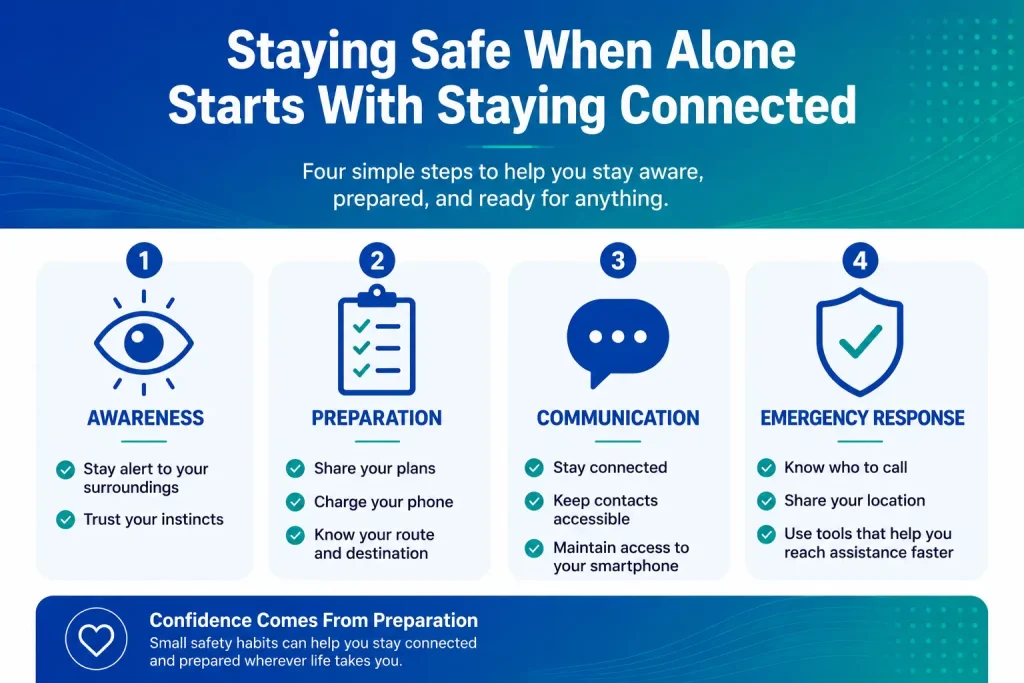
The foundation of personal safety is simple awareness.
Whenever you’re in a new environment, take a few minutes to understand what’s around you.
- Learn the routes you’ll use most often.
- Identify well-lit public areas.
- Know where to find help if needed.
- Keep emergency contacts accessible.
- Trust your instincts if something feels off.
Awareness isn’t about expecting problems. It’s about giving yourself options if circumstances change.
If You're Traveling Solo
Solo travel is one of the most rewarding ways to experience the world. You set your own schedule, follow your own interests, and build confidence with every trip.
A few habits can make solo travel even safer:
Share Your Itinerary
Before your trip, send a trusted friend or family member:
- Flight information
- Hotel or accommodation details
- Major travel plans
- Expected arrival times
You don’t need to provide constant updates, but someone should know your general plans.
Plan Your Arrival
Many travel challenges happen during transitions.
Before arriving:
- Save your hotel address offline.
- Research transportation options.
- Know how you’ll get from the airport or station to your accommodation.
- Have backup transportation options in mind.
Stay Connected
Whether you’re exploring a new city, heading back to your hotel after dinner, or walking through an unfamiliar area, staying connected adds peace of mind.
Simple check-ins, location sharing with trusted contacts, and keeping your phone charged can make a big difference.
Trust Your Instincts
If a situation feels uncomfortable, leave.
You never need to justify:
- Changing your plans
- Taking a different route
- Declining an invitation
- Moving to a public place
- Asking for help
Experienced travelers often say their instincts are one of their best safety tools.
If You're Working Remotely
Remote work has given people the freedom to work from almost anywhere.
Coffee shops, coworking spaces, rental properties, and extended workcations can be exciting, but they also mean spending more time alone in unfamiliar environments.
A few simple practices help:
- Let someone know where you’ll be working if you’re in a new location
- Keep your devices charged
- Avoid isolated work locations late at night
- Be intentional about how you’ll get home after dark
- Maintain a regular check-in rhythm with friends or family
Remote work often blurs the line between professional and personal time. Your safety plan should follow you through both.
If You're Hiking or Exploring Outdoors
Spending time outdoors is one of the best ways to recharge.
Whether you’re taking a short day hike or exploring a new park, preparation matters.
- Tell someone where you’re going.
- Share your expected return time.
- Check weather conditions before you leave.
- Carry water and essential supplies.
- Keep communication tools accessible.
When you’re carrying a backpack, using trekking poles, or navigating uneven terrain, reaching for your phone may not always be practical. Having a fast way to call for help can be valuable if an emergency occurs.
Why Accessibility Matters
Most people think of their phone as their primary safety tool.
And in many situations, it is.
But emergencies don’t always happen when your phone is already in your hand.
Your phone might be:
- In a backpack
- In a purse
- Charging across the room
- Buried in a pocket
- Difficult to access quickly
The ability to reach help quickly often matters just as much as having a phone available.
Where Silent Beacon Fits
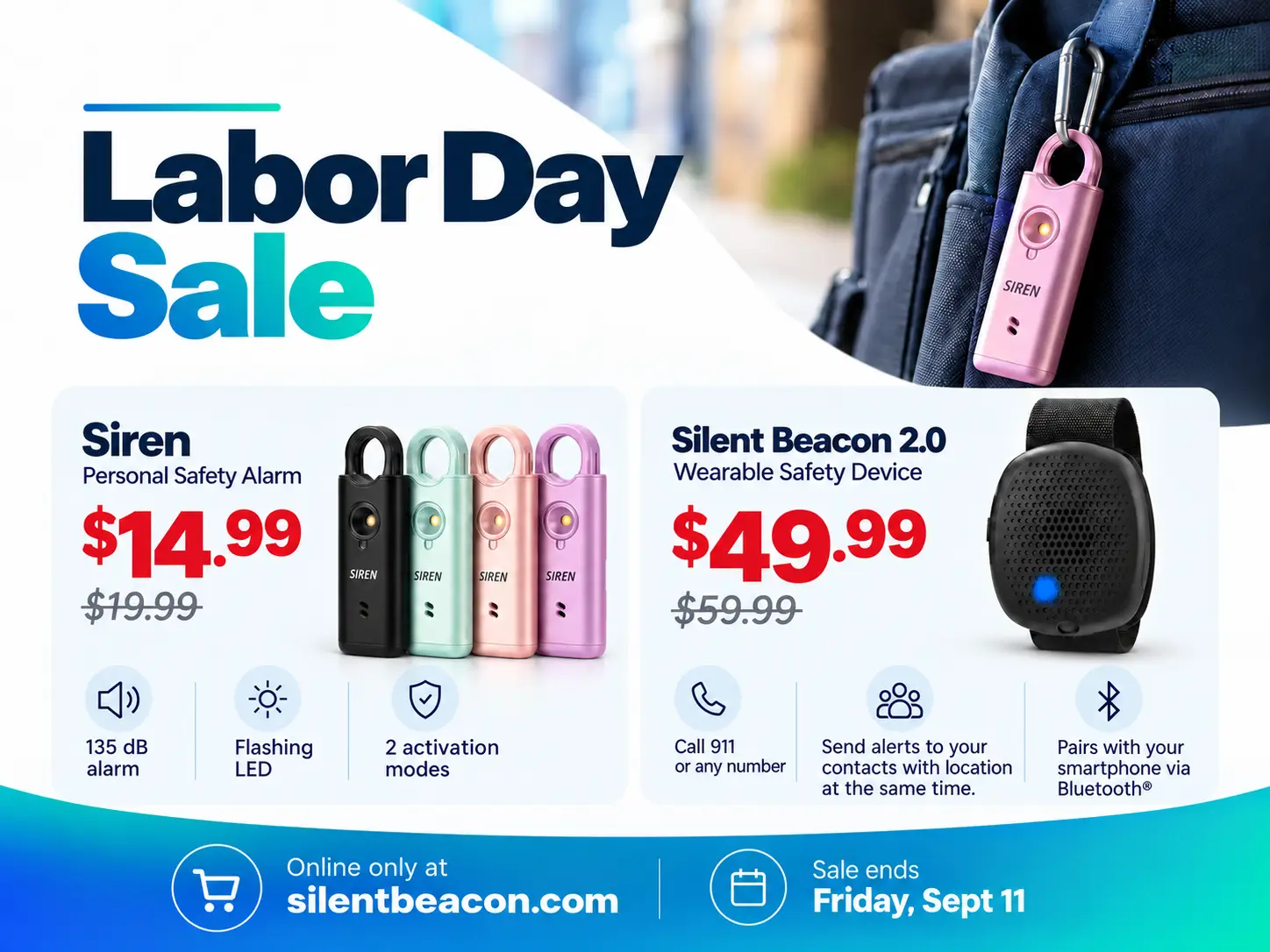
The Silent Beacon 2.0 wearable panic button is designed to work alongside your smartphone, giving you a faster way to reach help when seconds matter.

Features include:
- One-Button Press Emergency Activation: A single press can place a call and send emergency alerts without requiring you to unlock your phone or navigate an app.
- GPS Location Sharing During Alerts: Your designated contacts can receive your GPS location when an alert is activated.
- Hands-Free Communication: The built-in speaker and microphone allow you to communicate through the wearable itself.
- Multi-Channel Emergency Alerts: Alerts can be sent through text messages, emails, push notifications, and phone calls to the contacts you choose.
- Bluetooth® Connectivity: Silent Beacon pairs with your smartphone and uses the phone’s existing connectivity. No separate cellular plan is required.
The goal isn’t to replace your phone. It’s to make getting help faster and easier when you need it.
Freedom with a Backup Plan
The best adventures happen when you’re confident enough to enjoy them.
A little preparation, a few smart habits, and the right tools can help you focus less on what could go wrong and more on where you’re going next.
Whether you’re traveling solo, working remotely, exploring a new city, or enjoying time outdoors, confidence comes from knowing you’re prepared.
Frequently Asked Questions.
What is the best way to stay safe when you are alone?
Combine a few habits with the right tools: know your environment, share your plans with someone you trust, trust your instincts, and keep a fast, single-press way to call for help within reach rather than buried in a bag.
Is solo travel safe?
Yes. Millions of people travel alone every year. Preparation, awareness, and staying connected can help make solo travel a safe and rewarding experience.
Does Silent Beacon work without a smartphone?
No. Silent Beacon 2.0 pairs with a smartphone via Bluetooth and uses the phone’s connectivity to place calls and send alerts.
Why use a wearable safety device instead of only relying on a phone?
A wearable safety device can be activated with a single button press and provides hands-free communication, making it easier to reach help when accessing a phone may not be practical.
Does Silent Beacon require its own cellular plan?
No. Silent Beacon connects to your smartphone via Bluetooth and uses your phone’s existing connection.
Be Ready When Seconds Matter
Whether you’re traveling solo, working remotely, or spending time outdoors, Silent Beacon helps you call for help, share your location, and alert your trusted contacts with the press of a button.