A Decade Behind: The Lone Worker Safety Gap in Home Healthcare
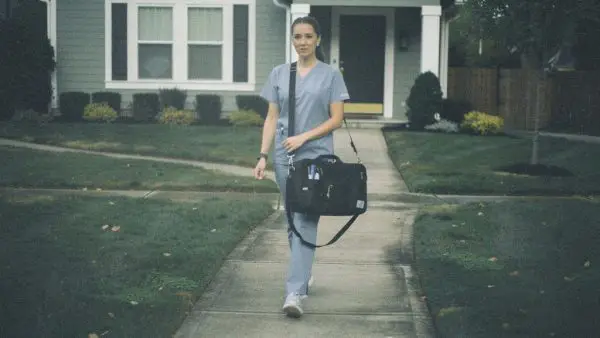
A home health aide arrives at a patient’s residence for a routine visit. Within minutes, a family member becomes aggressive and blocks the exit. Her training kicks in: stay calm, de-escalate, find a way out.
But she’s alone. And in situations like this, training only goes so far.
This isn’t a rare edge case.
Variations of this scenario happen thousands of times a year across the country. The industry has responded with good intentions — better screening processes, check-in protocols, training programs — but those responses haven’t kept pace with the scale of the problem.
The technology to meaningfully support the safety of lone healthcare workers exists right now. The only question is whether leadership acts before an incident makes the decision for them.
The Numbers Are Hard to Ignore
Home healthcare workers experience workplace violence at four to five times the national average across all occupations.¹ That’s not a marginal difference. That’s a structural problem.
The downstream effects are significant:
- Roughly 40% of home healthcare workers who have experienced a violent incident report persistent fear that follows them into every subsequent visit.²
- Agencies are seeing annual turnover rates between 40% and 60%, with unsafe working conditions as a leading driver.³
- Each time a worker leaves, agencies absorb $2,000 to $5,000 in replacement costs: recruiting, onboarding, and lost productivity combined.⁴
Taken together, these aren’t isolated HR challenges. They’re symptoms of an industry that has consistently underinvested in protecting its most exposed workers.
Why the Safety Gap Has Persisted
It’s worth asking an honest question: if the technology exists and the need is clear, why hasn’t adoption been faster?
The answer isn’t negligence. It’s context.
The Margin Reality
Home healthcare agencies operate on some of the thinnest margins in healthcare. Staffing shortages, reimbursement pressure, and daily operational demands leave little room for discretionary investment. Safety technology has to make its case alongside everything else competing for a constrained budget, and that’s a hard conversation when the consequences of inaction aren’t always visible until something goes wrong.
The Environment Problem
Unlike a fixed workplace, every home visit is a different situation with different variables. Agencies have done what they could with available tools: risk screenings, check-in protocols, buddy systems for high-risk visits. But those measures have always had clear limits. The gap hasn’t been lack of effort. It’s been lack of solutions practical enough to work in environments no one controls in advance.
The Noisy Market Problem
The lone worker safety space expanded quickly, and the volume of overlapping solutions made evaluation difficult. For leadership teams already stretched thin, sorting through competing products with similar claims is a real burden. Many agencies made a reasonable call to wait for the technology to mature before committing.
That wait is over. The solutions available today are meaningfully better than what existed five years ago, and the window for inaction is narrowing.
What's Shifting the Conversation
Momentum is building from several directions at once.
Regulatory pressure is no longer hypothetical. OSHA has sharpened its focus on healthcare workplace violence, and multiple states are moving toward legislation requiring concrete lone worker protections, not just written policies. Agency directors are also reporting something new: candidates are raising lone worker safety technology in interviews. The pressure is coming from regulators and the workforce at the same time.
Adjacent industries have already proven this works. Municipal agencies, mental health organizations, and social services have been deploying wearable safety solutions for field workers for years. The results are consistent: reduced anxiety, stronger retention, faster emergency response. Home healthcare has a clear roadmap. It just hasn’t followed it yet.
The tools have also caught up. Today’s purpose-built wearables are small, discreet, and designed for workers who can’t stop to open an app in a threatening moment. Silent alert capabilities mean help can be called without escalating a volatile situation.
See How Mental Health Cooperative Helps Keep Its Workers Safe During Home Visits
What to Look for When Evaluating Solutions
Not all lone worker safety tools are built the same. For healthcare agency leaders working through this decision, here are the criteria that separate solutions that actually protect people from ones that exist primarily on paper.
1. Response Time
This is the most critical variable. A solution that requires unlocking a phone, opening an app, and navigating to an alert button introduces 15 to 30 seconds of friction. In a threatening situation, that’s too long. Look for single-action activation, one press triggers an alert.
2. GPS Accuracy in Residential Settings
A general location isn’t useful when dispatching emergency services to a residential neighborhood. Evaluate real-world accuracy in the indoor and suburban environments your workers actually operate in.
3. Silent Alert Capability
Workers need the ability to call for help without alerting an aggressor. Any solution that requires making an audible call or visible action in a tense situation is missing a critical feature.
4. Hands-Free Two-Way Communication
Once an alert is triggered, workers shouldn’t have to hold a phone to communicate with responders. Hands-free audio keeps them mobile and able to relay information while staying focused on their safety.
5. Privacy-Respecting Oversight
Agencies need alert monitoring, incident records, and compliance reporting. But workers aren’t inventory: constant location tracking undermines trust. Look for platforms that activate tracking only during alerts or worker-initiated check-ins.
6. Adoption-Friendly Design
The best safety technology is the kind workers will actually use. If the device is uncomfortable, confusing, or requires significant behavior change, it won’t get worn. Evaluate form factor, battery life, and how seamlessly it fits into an existing routine.
7. Total Cost of Ownership vs. Cost of Turnover
A practical way to frame the investment: if your agency runs 50% annual turnover on 100 workers and replaces each at $3,500, that’s $175,000 in turnover costs per year. A 20% reduction — a conservative estimate for agencies that implement wearable safety solutions — saves $35,000 annually. That’s before accounting for reduced workers’ comp claims and liability exposure.
A Question Worth Asking Right Now
Home healthcare workers walk into uncertainty every shift so that patients can receive care in their own homes. The least any agency can do is give them a reliable way to get help when they need it.
Here’s a question worth putting to your leadership team today:
“If one of our workers triggered a panic alert right now, how quickly could we reach them — and would we know exactly where they are?”
If that answer isn’t clear and confident, it’s time to take a closer look at your options.
See How Silent Beacon Helps Protect Home Healthcare Workers
References
- National Institutes of Health, National Library of Medicine. (2024). [Article available on PubMed Central]. Retrieved from https://pmc.ncbi.nlm.nih.gov/articles/PMC12771974/
- National Institutes of Health, National Library of Medicine. (2022). [Article available on PubMed Central]. Retrieved from https://pmc.ncbi.nlm.nih.gov/articles/PMC9314693/
- LeadingAge. (n.d.). Workforce Cost Calculator. Retrieved from https://leadingage.org/workforce-cost-calculator/
- Alora Health. (n.d.). The Financial Impact of High Staff Turnover in Home Health Agencies. Retrieved from https://www.alorahealth.com/blog-the-financial-impact-of-high-staff-turnover-in-home-health-agencies/