Walking Alone at Night: Safety Tips for Darker Fall Evenings

Key Takeaways
- The most effective safety habits for walking alone at night are simple: pick a lit, familiar route, tell one person your plan and expected arrival, keep your hands and hearing free, and carry a way to call for help that does not require unlocking your phone.
- Darkness, not distance, is the risk multiplier. NHTSA’s 2024 pedestrian data shows 76 percent of pedestrian deaths happened in the dark, compared with 20 percent in daylight.
- Only about a quarter of all traffic volume happens after dark, according to the Federal Highway Administration, which means the danger is concentrated, not spread evenly.
- Nothing about your routine changes in October. Sunset just arrives earlier, and the walk you have done for months is suddenly a different walk.
- Halloween falls on Saturday, October 31 this year, which makes it one of the busiest pedestrian nights of the year.
Walking alone at night is safest when you make three decisions before you leave: where you are going, who knows about it, and how you would call for help if something felt wrong. The reason this matters more in October is not that people change in the fall. It is that daylight ends earlier, and a walk you have taken safely all summer now happens in the dark.
THREE DECISIONS BEFORE YOU LEAVE
1
Where you are going
2
Who knows about it
3
How you would call for help
Your Routine Did Not Change. The Light Did.
Think about the walk you take most often. The office to the parking garage. The dog’s evening loop. The bus stop to your front door. In July, all of it happened in daylight. By late October, most of it does not.
You did not decide to start walking at night. Sunset moved and your schedule stayed put, which is why fall catches people off guard. There is no moment where you think “I am now doing something riskier.” The habit feels identical. Only the conditions changed. When daylight saving time ends on Sunday, November 1, 2026, the shift gets sharper still.

What the Data Says About Walking After Dark
The numbers on this are lopsided in a way most people do not expect.
According to the National Highway Traffic Safety Administration’s 2024 pedestrian data, 76 percent of pedestrian fatalities occurred in dark conditions. Daylight accounted for 20 percent. Dawn and dusk made up the remaining 4 percent. In the same year, NHTSA recorded 7,080 pedestrian deaths in traffic crashes on public roads.
76%
20%
■ Dark • 76% ■ Daylight • 20% ■ Dawn and dusk • 4%
■ Dark • 76%
■ Daylight • 20%
■ Dawn and dusk • 4%
Source: NHTSA, Pedestrians: 2024 Data
Set that against a second figure. The Federal Highway Administration notes that only about 25 percent of all traffic volume occurs after dark.
A quarter of the traffic. Three quarters of the deaths. That gap is the entire argument for treating a dark walk differently from the same walk in daylight.
Two other patterns from the 2024 figures are worth carrying with you: most pedestrian deaths happened in urban areas rather than rural ones, and around three quarters happened away from intersections. This does not mean stop walking. It means the same route deserves more attention once the sun is down.
25%
76%
of pedestrian deaths occurred in the dark
A Practical Safety Reset for Fall Evenings
You do not need a new lifestyle. You need about four adjustments, most of which take a few seconds.
01 Choose the lit route, even when it is longer
The shortest way home is rarely the best-lit way home. Given how many pedestrian deaths happen in the dark and away from intersections, three extra minutes on a road with streetlights and crosswalks is a good trade.
Pick your dark-months route once, then stop deciding every night. Decision fatigue at the end of a long day is how people end up taking the unlit shortcut.
02 Tell one person your plan
Not a group chat. One person, with two pieces of information: where you are going and roughly when you expect to arrive.
The value here is not that someone can stop something from happening. It is that if you do not arrive, somebody notices within minutes instead of hours. That difference is enormous and it costs you one message.
03 Keep your hands and your hearing free
Both hands occupied and both ears covered is the most common avoidable mistake. If you walk with headphones, use one side or keep the volume low enough to hear a car, a bike, or footsteps. And if reacting to something would mean putting something down first, you are carrying too much.
04 Be visible, and assume you are not
Drivers see less than you think. Dark coats and dark running gear are close to invisible at speed. Reflective material on your moving parts, wrists and ankles, reads as human motion far earlier than a patch on your back does.
05 Plan for Halloween specifically
Halloween falls on a Saturday this year, October 31. That combination matters: costumes limiting vision, more people walking after dark than any other night, and Saturday already being one of the highest-risk days of the week for pedestrians.
If you are out with kids, cross at corners, carry a light, and agree on a meeting point before you start. If you are walking home from something later that night, the lit-route rule matters more than usual.
How Silent Beacon Fits Into an Evening Routine
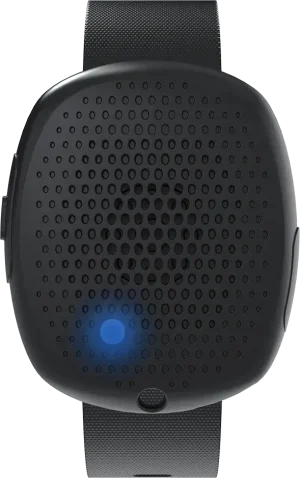
Every habit above assumes you have a free hand and enough time to use your phone. In the moments that actually go wrong, you often have neither. That is the gap Silent Beacon was built for. Silent Beacon’s 2.0 panic button pairs to your phone over Bluetooth® and clips to a jacket, bag strap, or keychain, so calling for help does not mean digging out and unlocking a phone in the dark.
Three things it does that fit an evening walk:
-
It places a hands-free call while alerting the people you chose.
The call connects through your paired phone on speaker, and at the same moment your emergency contacts receive a text, an email, and a push notification with your GPS location. You are not choosing between calling for help and telling someone where you are. -
Check-In Mode handles the "text me when you get there" problem.
It sends a safe-arrival message with your location, so the person who is waiting to hear from you actually hears from you, even on the nights you forget. -
Footsteps Mode shares your live location, but only when you turn it on.
You decide when someone can see where you are, and you decide when that stops. Your location is not being tracked in the background the rest of the time.
WHAT HAPPENS WHEN YOU PRESS THE BUTTON
STEP 1
Press the 2.0
Clipped to a jacket, bag strap, or keychain
STEP 2
Your paired phone
Over Bluetooth, using its cellular or wifi connection
AT THE SAME MOMENT
- Hands-free call on speaker
- Contacts get a text, email, and push notification with your GPS location
Worth being straightforward: the 2.0 uses your phone’s cellular or wifi connection to place the call and send those alerts, so it is not a satellite device. For neighborhood walks, campus routes, commutes, and parking garages, all places with normal phone service, it does exactly what you need. For genuine wilderness with no coverage, you would want a satellite communicator instead.
If you want something simpler with no phone involved at all, the Silent Beacon personal safety alarm is a loud deterrent that draws attention on its own.
Frequently Asked Questions.
What is the single most important thing to do when walking alone at night?
Tell one person where you are going and when you expect to arrive. It costs almost nothing and it is the difference between someone noticing you are missing in ten minutes versus the next morning. Pair it with a well-lit route and you have covered most of the practical risk.
Is it actually more dangerous to walk in the fall, or does it just feel that way?
The risk is real and it comes down to light. NHTSA’s 2024 data shows 76 percent of pedestrian fatalities happened in dark conditions, even though the Federal Highway Administration notes only about a quarter of traffic volume occurs after dark. Your fall walk is the same walk, in far worse visibility.
Does a panic button work without my phone?
The Silent Beacon 2.0 pairs to your phone over Bluetooth and uses your phone’s cellular or wifi signal to place the call and send alerts. It does not need its own plan or subscription, but it does need your phone to be with you and in service. For everyday walks, commutes, and campus routes, that is the normal situation.
Get Set Up Before the Clocks Change
Daylight saving time ends November 1. The evenings are already darker than they were a month ago, and the routine that has felt fine all summer is now happening in the conditions where three quarters of pedestrian deaths occur.
Pick your lit route. Tell one person your plan. Keep a hand free.
If you want a faster way to call for help on those walks, browse Silent Beacon’s personal safety devices and get set up before the clocks change.